
Same : "It works because it’s the opposite of AI. It's so human"
Backstage at The Grace, there’s no sign of pre-show nerves. Instead, Harry and Jimmy are trying to explain to me the rules of a card game called Cambio. Apparently it’s become their latest tour obsession. Arguments break out. Cards get stolen. Friendships are tested. They’ve even been playing it while working the door at their own shows. “It’s getting pretty heated,” Jimmy laughs.
For a band playing the second-to-last date of their first UK tour, they’re surprisingly relaxed. The room is full of the easy back-and-forth that only really exists between siblings. They finish each other’s stories, interrupt each other’s punchlines and occasionally derail entire conversations. The brothers have spent years making music together, chasing different versions of the same dream before eventually stripping everything back to just the two of them. Their earliest memories involve plastic instruments bought by their dad from Argos — a toy drum kit for Harry and a tiny electric guitar for Jimmy. Eventually the toys became real instruments. Harry swapped drums for guitar after discovering that practising drums alone wasn’t much fun, teaching himself chords through YouTube videos.

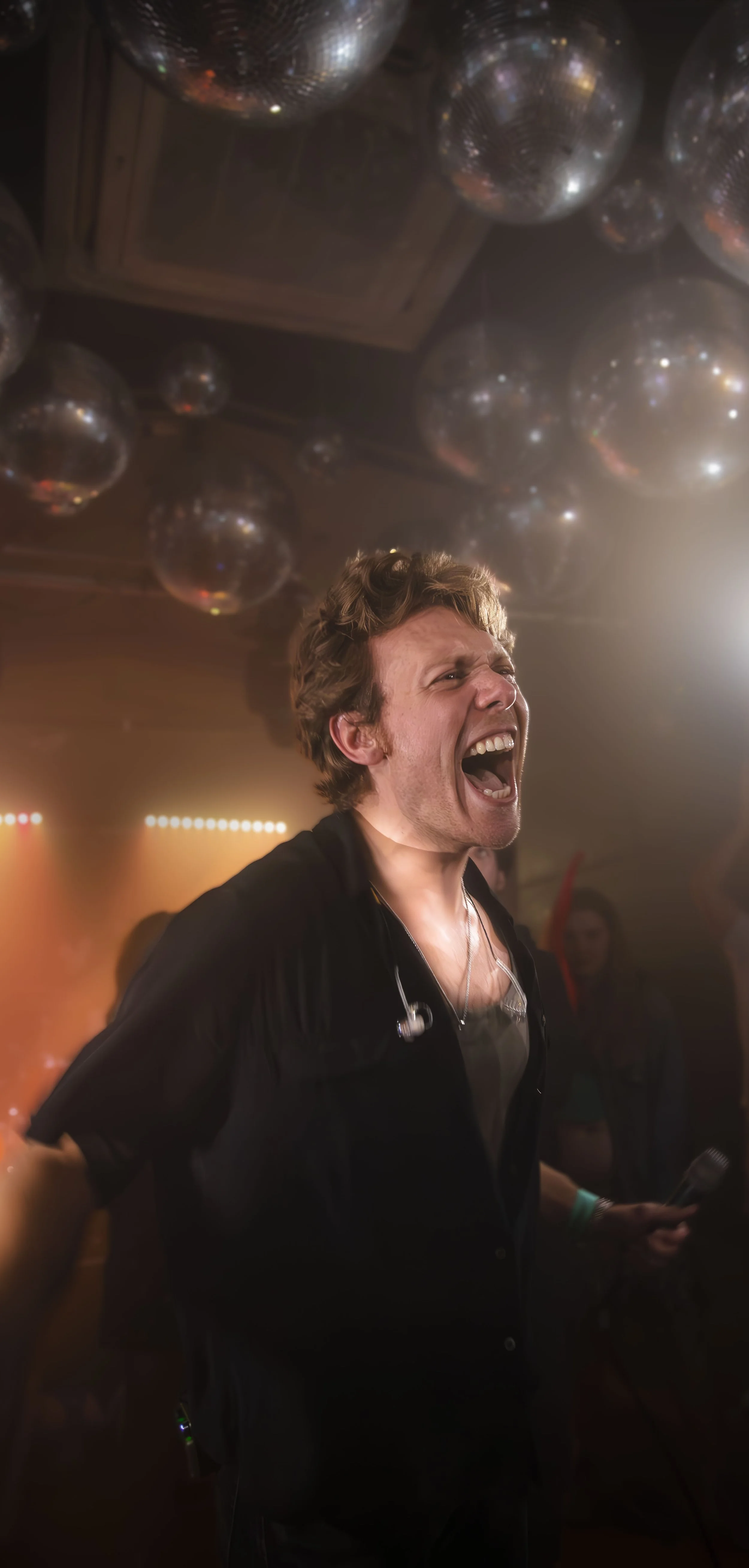





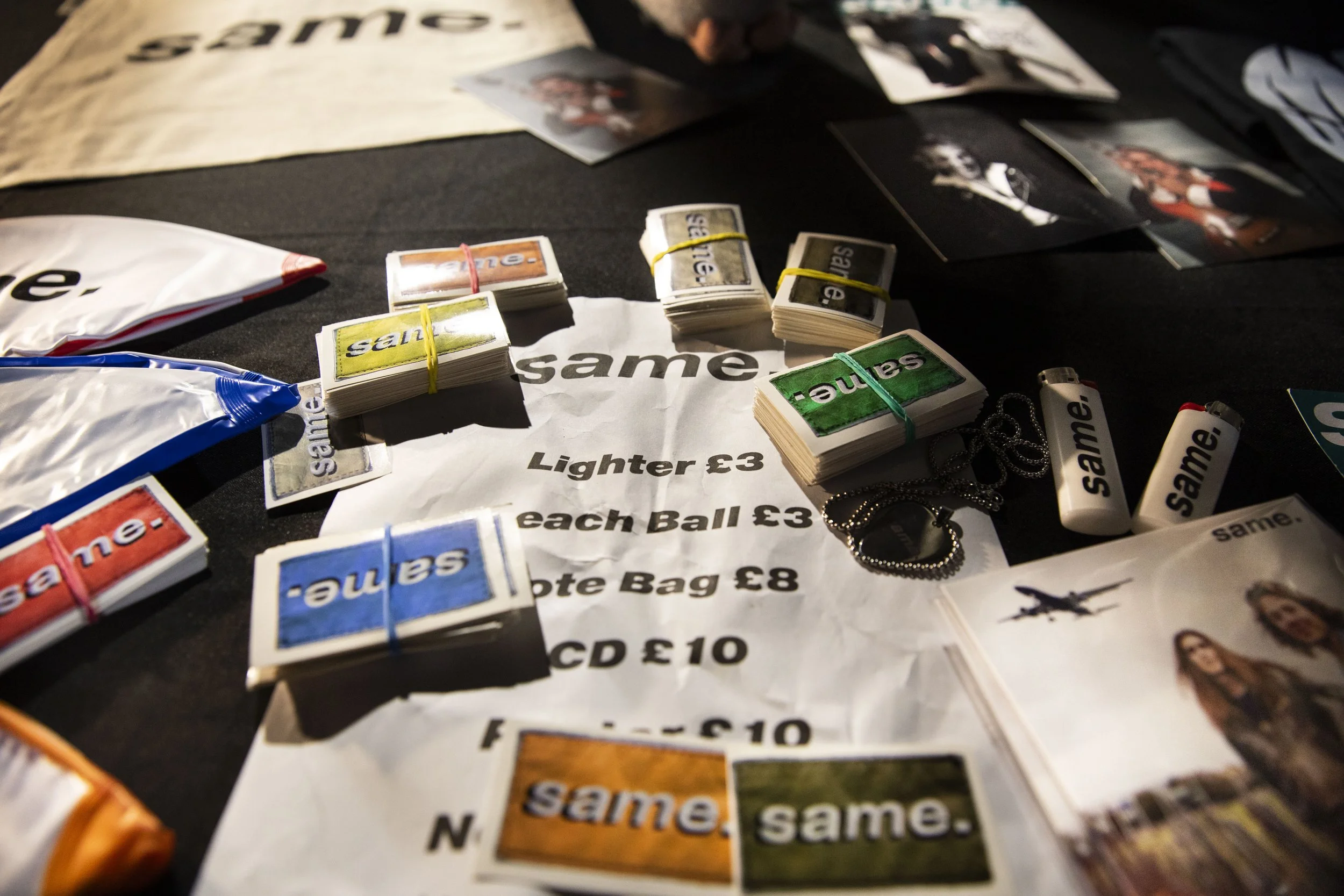
Being brothers has obvious advantages. “You’ve always got half a band,” Harry jokes. It also means the conversations never stop. Whether they’re driving between cities, eating dinner or sitting at home, they’re always talking about what’s next: another song, another show, another idea. There’s very little separation between family life and band life. Same. isn’t just a band—it’s a family project.
Their biggest supporter just happens to be their dad.
That success has come in an unconventional way. While their shimmering indie pop has been steadily finding its audience, it was their dad’s now-iconic dance videos—posted to champion his sons’ music—that introduced thousands of people to Same., eventually landing the family on American television, with an appearance on The Kelly Clarkson Show.
None of it feels calculated. “It’s all just real,” Harry says. “The fact we’re brothers, the fact we get on with our dad—that’s genuinely what our lives are like.” In an industry where artists are increasingly expected to become content creators, the duo’s rise feels almost accidental. There’s no elaborate strategy, no carefully manufactured online persona. Just two brothers making jangly, feel-good indie pop and a dad who likes dancing to it. “It works because it’s the opposite of AI,” Jimmy says. “It’s so human.” And that’s the impression they leave throughout the afternoon—not “authentic” in the overused marketing sense, but genuinely uninterested in creating distance between themselves and the people listening to their music.
Read the full feature in the upcoming issue of Soundcheck!