The end of the industry monolith: how indie music wins on its own terms
Everyone whines that "indie music is dying"... but it's not! To me it seems more alive than it has ever been.
There’s a specific feeling you get when you walk into a 200-capacity room to see a band. It’s not the polished, sterile energy of a stadium show curated by a boardroom; it’s the smell of stale beer, the hum of a DIY pedalboard, and the sense that everyone in the room is part of a secret that’s just starting to get out.
The myth of the big break
In 2026, the most exciting thing in music isn’t a viral TikTok sound—it’s the return of the organic build. The mainstream loves the fairy tale of the overnight success, the idea that a single viral loop or a lucky algorithm strike can catapult an artist from a bedroom to a stadium.
We’ve been conditioned to believe in the big break—that one day an artist uploads a song, and by Friday, they’re headlining Glastonbury. But if you look at the trajectory of bands currently gaining real ground, the overnight part is a total myth. Real growth is a slow-motion grind. Success in this scene isn’t a fleeting season; it is perennial. For indie bands like Ambers or The Safest Place the trajectory isn’t a vertical line; it’s a web. It’s built on the unsexy work of repetition: playing the same dive bars in the same rainy cities, returning six months later to find that the ten people who liked them last time have brought three friends each.
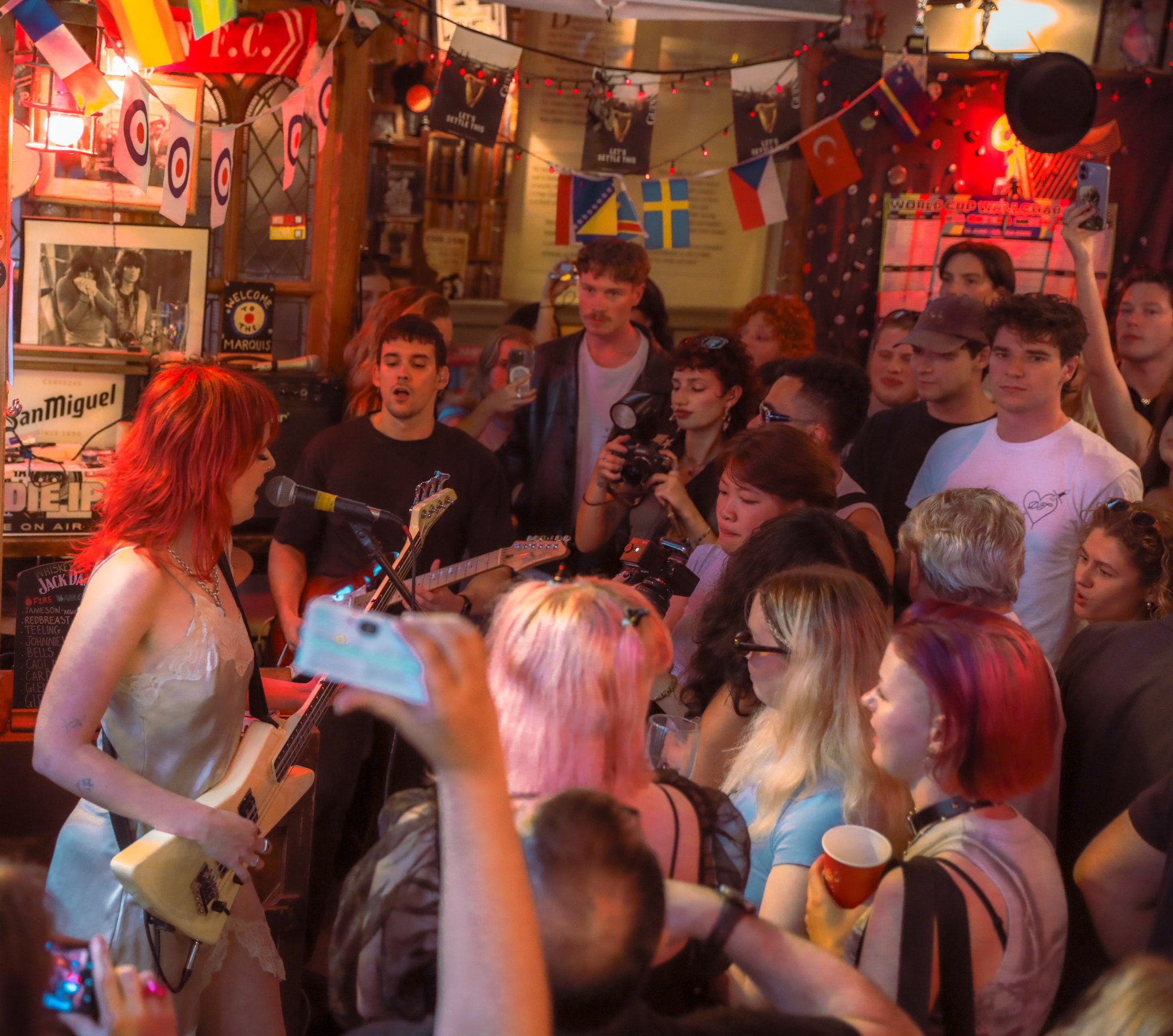
© Amandine Charles Hotz
This consistency is the heartbeat of the modern indie movement. It’s about the drummer who stays behind at the merch table to talk gear with a fan, or the lead singer who actually remembers the name of the local promoter. It’s the constant, authentic interaction on social media that feels less like a marketing campaign and more like a group chat. These bands aren’t waiting for a label to break them; they are building their own foundations, brick by brick, through sheer presence.
Indie success isn’t a lightning bolt; it’s a series of controlled fires.
Indie is not dying, it’s decentralizing
You’ll often hear critics moan that “indie is dead” because there isn’t one singular “Indie Sound” dominating the charts like it did in 2005. They’re looking at the wrong map.
We are moving away from a monolithic industry-forced sound and into a world of micro-scenes. Instead of one big sun that everyone orbits, we have a galaxy of small, intense fires. Today, a band can be “world-famous” to a specific pocket of 20,000 people who live for a very particular blend of shoegaze and folk, while remaining completely invisible to the mainstream.
This is a good thing. It means the gatekeepers have lost their keys. When a band grows, they do it by owning their relationship with their fans directly—through newsletters, physical merch, and intimate live sets—rather than waiting for a label to grant them an audience.
This fragmentation is actually the genre’s greatest strength. It means the industry can no longer force-feed us a “next big thing” that doesn’t resonate. Instead, the power has shifted to these smaller, tighter circles where the connection between the artist and the listener is direct and unfiltered.
The organic feel we crave isn’t just about the music—it’s about the fact that we can see the work. We can see the miles on the van and the years of practice in the performance. That, is what indie music is about.